Quick Answer
Your Thailand import bill is high in 2026 because customs usually assesses from the first baht and calculates on CIF (item + shipping + insurance), not item price alone. Duty and 7% VAT are layered on top, and courier handling fees can further increase the final amount.
Landed Cost Breakdown
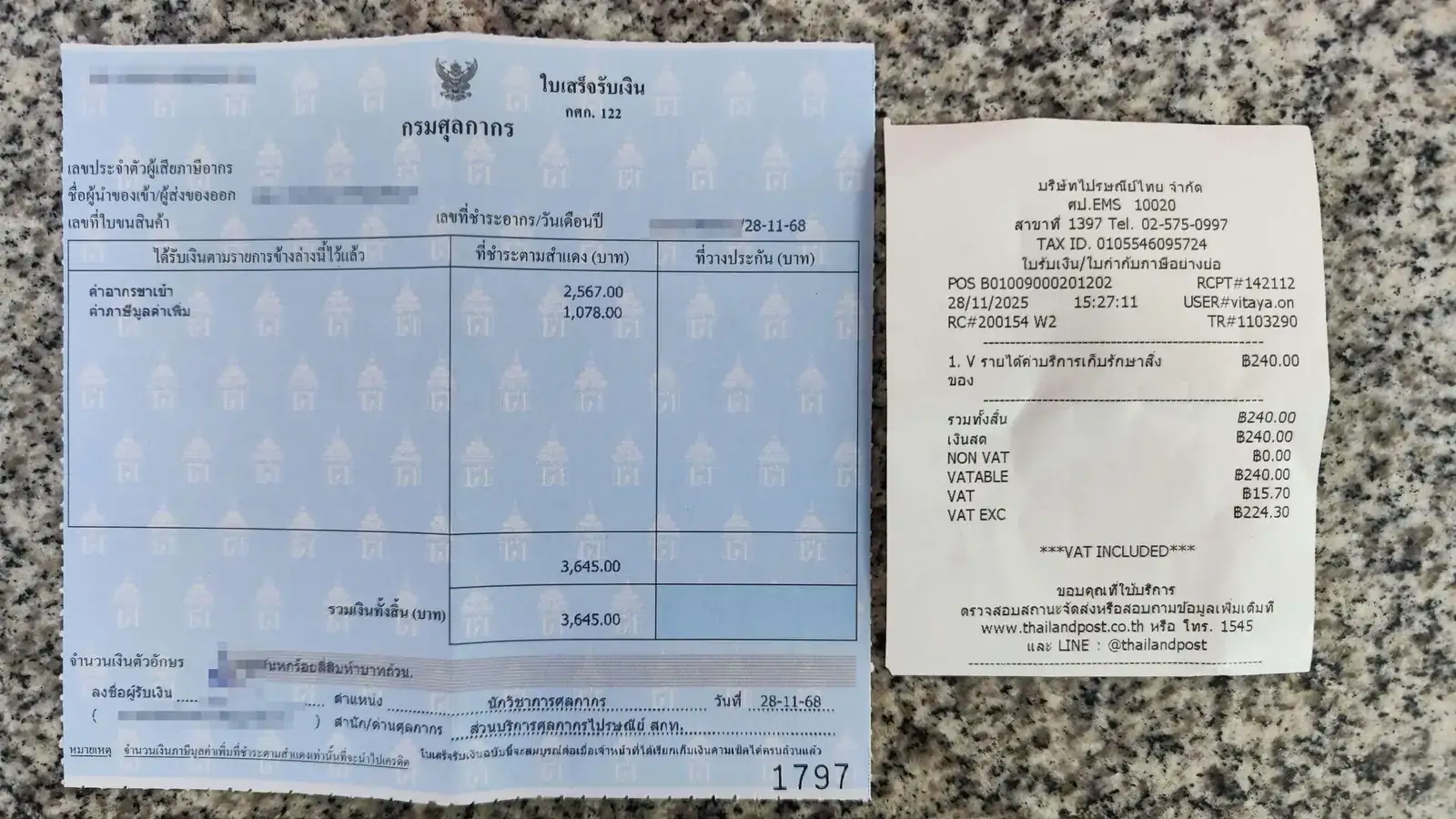
The "Checkout Shock" is Real
You find the right product online, the checkout price looks fair, and shipping seems manageable. Then the parcel arrives in Thailand and the tax bill changes the economics completely. In 2026, customs is not taxing only the product, it is taxing the full import journey.
The Hidden Math: It's Not Just the Price Tag
Most buyers assume tax is based on item value only. Thai customs generally starts from CIF (cost, insurance, freight). Under current first-baht treatment, low-value imports are also assessed more consistently than before.
| Component | What it is | The Hidden Part |
|---|---|---|
| Item Price | 1,700 THB | This is all you thought you were paying for. |
| Shipping (Freight) | + 500 THB | Import tax can also apply to shipping cost. |
| Insurance | + small % | If not clearly shown, customs may estimate insurance in valuation. |
| Customs Value (CIF) | 2,200 THB | This becomes the tax base. |
| Import Duty (example 30%) | + 660 THB | Depends on HS classification and product category. |
| VAT (7%) | + 200 THB | VAT applies on the larger taxable base, not item price alone. |
| Total Import Charges | 860 THB | Can approach 50% of the original item value. |
3 "Surprise" Fees You Did Not See Coming
Beyond statutory duty and VAT, logistics operators may add operational fees that many buyers only discover after arrival.
- Advancement fee: some couriers pay tax first to release faster, then charge a handling fee when collecting from you.
- Storage clock: if payment or documents are delayed, warehouse or terminal storage fees may begin accruing daily.
- Exchange-rate gap: customs conversion rates can differ from your card statement conversion at purchase time.
How to Actually Lower the Bill
You cannot bypass the law, but you can reduce avoidable cost and delay.
What to Check Before You Pay That SMS Link
- Confirm whether the amount is government tax only or includes courier handling charges.
- Check declared value and conversion assumptions against your payment records.
- Verify product description and category are accurate before payment.
- Request a written breakdown if the amount looks materially higher than expected.
- Check whether storage charges were applied and whether the delay was within your control.