Thailand’s New Online Import Tax 2026
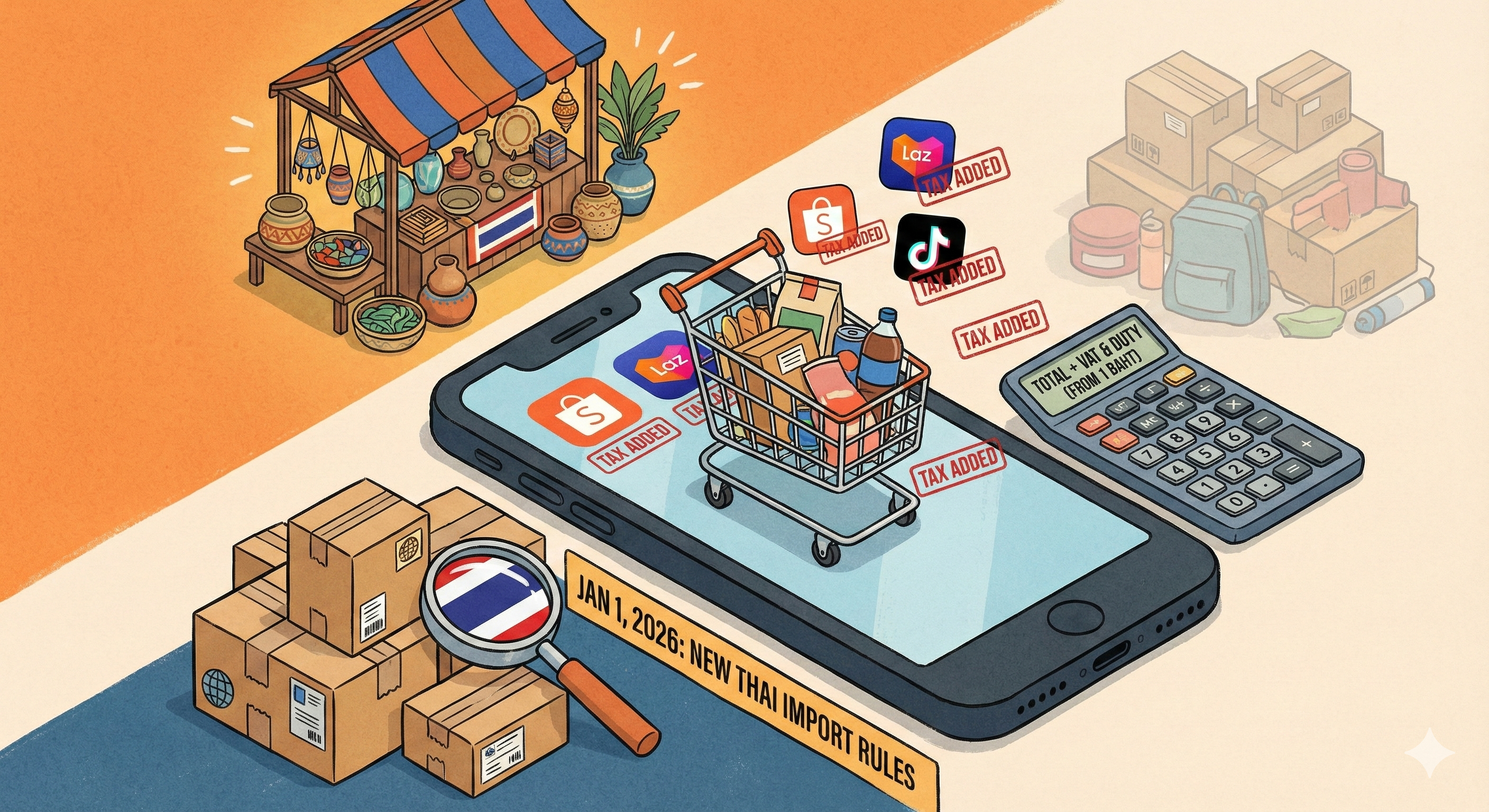
**The End of Tax-Free Shopping? Thailand Begins Taxing Online Imports from the First Baht**
As of January 1, 2026, the landscape for online shopping in Thailand has officially changed. If you enjoy hunting for deals on international platforms, you’ve likely heard the buzz: the 1,500 THB tax exemption is gone.
Here is everything you need to know about the new import tax regulations and how they will impact your wallet this year.
**What is the New 2026 Import Tax Law?**
For years, Thai consumers could import goods valued under 1,500 THB without paying VAT or customs duties. However, to create a fairer environment for local Thai SMEs, the government has moved to tax all imported goods from the very first baht.
This means whether you are buying a 20 THB phone case or a 1,400 THB pair of sneakers from abroad, VAT (Value Added Tax) and applicable import duties will now be applied.
**How Much Will Prices Increase?**
According to government spokesperson Lalida Periswiwatana, consumers should prepare for price adjustments depending on the product category:
- Fashion & Apparel: Expect a price hike of approximately 20–30%.
- General Goods: Prices will vary based on the specific customs duty rates for each item type.
**Will Shopping Become More Difficult?**
The short answer is no. The Thai Customs Department has worked closely with major e-commerce platforms to ensure the transition is seamless.
Currently, 97% of taxes are calculated automatically at checkout on platforms like:
- Lazada
- Shopee
- TikTok Shop
- SHEIN
- TEMU
This "landed cost" model means you pay the tax upfront during your purchase. You won’t have to visit a customs office or deal with extra paperwork—your package will arrive at your door just like before.
**A Focus on Safety: TIS and FDA Standards**
This move isn't just about revenue; it’s about consumer protection. The government is tightening its grip on low-quality or dangerous goods. Customs is now strictly screening for:
- TIS (มอก.) Standards: Ensuring electrical appliances and toys are safe.
- FDA (อย.) Compliance: Monitoring cosmetics, supplements, and food.
- Prohibited Items: A complete ban on illegal imports like e-cigarettes.
Platforms are now required to delist any products that do not meet these legal Thai standards.
**Why the Change? Supporting Thai SMEs**
The primary goal of this policy is fairness. Local Thai businesses pay VAT and follow strict regulations from day one. By taxing imports from the first baht, the government is leveling the playing field, ensuring that cheap, untaxed imports don't unfairly disadvantage home-grown entrepreneurs.
**Final Thoughts**
While we all love a good bargain, these changes aim to build a more transparent and safe digital economy in Thailand. You might pay a little more for that international delivery, but you can shop with more confidence regarding product quality and legal compliance.